The Holiday Liquidity Gap: Survival Guide for the Banking Void
The final two weeks of the fiscal year represent the most treacherous yet opportunistic period in the crypto markets. We are entering the "Banking Void"—a specific window where traditional settlement rails (SWIFT, SEPA, FedWire) go dormant, while on-chain protocols operate with zero latency. This creates a fascinating, albeit risky, decoupling of market mechanics.
For the veteran market participant, this isn't just about "banks being closed." It is a structural stress test of liquidity. When institutional market makers wind down their books and fiat on-ramps freeze, the depth of order books on centralized exchanges (CEX) thins out. This forces volume on-chain, exposing DeFi protocols to higher volatility and, crucially, distinct arbitrage opportunities that only exist during this seasonal anomaly.

Mechanism of Action: The "Fiat-Peg" Stress Test
The most critical metric to watch during the holidays is not Bitcoin's price, but the **Stablecoin Peg**. With redemption windows at major issuers (like Circle or Tether) often paused or delayed due to banking holidays, the arbitrage loop that keeps stablecoins at $1.00 weakens.
In previous cycles, we have observed temporary de-pegs in heavy liquidity pools (like Curve's 3pool) simply because the "real-world" arbitrageurs couldn't move fiat fast enough to rebalance. This connects directly to broader Risk-On vs Risk-Off crypto market cycles. When the exit door (fiat) is locked, capital rotates internally, often fleeing to "hard" assets like BTC or ETH within the DeFi ecosystem itself.
Tax-Loss Harvesting: The Invisible Sell Pressure
Institutional selling in late December is rarely driven by sentiment; it is driven by the tax code. We see a predictable pattern of "dumping" underperforming altcoins to realize losses, which offsets capital gains liabilities. This creates artificial price suppression on assets that are down >50% YTD.
However, the nuance lies in the execution. Sophisticated players do not sell to fiat; they swap into correlated assets to maintain exposure while resetting their cost basis (jurisdiction dependent). This high-velocity swapping creates a fee-generation bonanza for Liquidity Providers (LPs), but it also creates a minefield for retail traders entering late.
Understanding the distinction between Short-Term vs. Long-Term Capital Gains is paramount. A trade executed seconds before midnight on December 31st crystallizes the tax event for the current year. Miss that window, and you are carrying the liability forward.
Sector Analysis: Where the "Smart Money" Parks
While retail chases meme coins out of boredom, smart money moves defensively. We observe a migration of capital into specific DeFi verticals that offer "Bear Market" or "Stagnant Market" yields. This is not about capital appreciation; it's about capital preservation and yield farming while volatility is unpredictable.
| Protocol Type | Q4 Holiday Behavior | Risk Vector (The "Gotcha") |
|---|---|---|
| Concentrated Liquidity (Uniswap V3) | Higher fee generation due to volatility spikes in thin markets. | Impermanent Loss: If price moves outside your range while you are away at holiday dinner, you return holding 100% of the depreciating asset. |
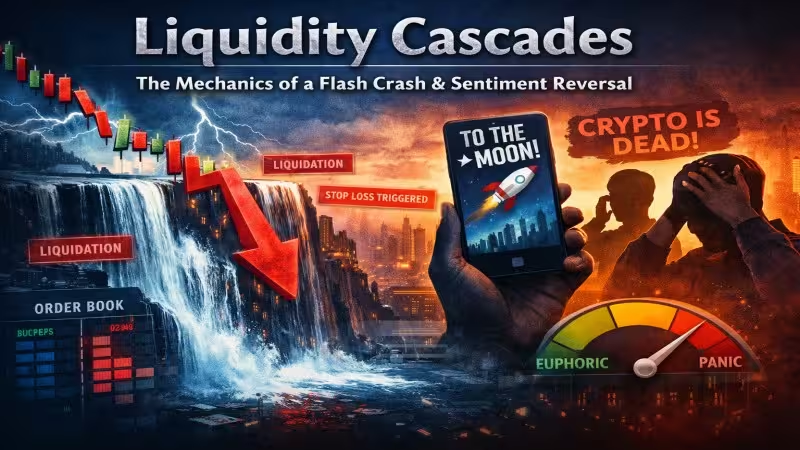
| Over-Collateralized Lending (Aave) | Utilization rates spike as traders borrow against crypto to fund real-world holiday expenses (off-ramping). | Liquidation Cascades: Thin liquidity means a small sell order can crash price, triggering liquidations. Monitor your Health Factor aggressively. |
| Cross-Chain Bridges | High volume as users rotate funds to cheaper networks (L2s) to avoid Mainnet gas spikes. | Bridge Exploits: Historically, hackers target bridges during holidays knowing security teams are understaffed. |
The Retail Trap: "Boredom Trading" & MEV Bots
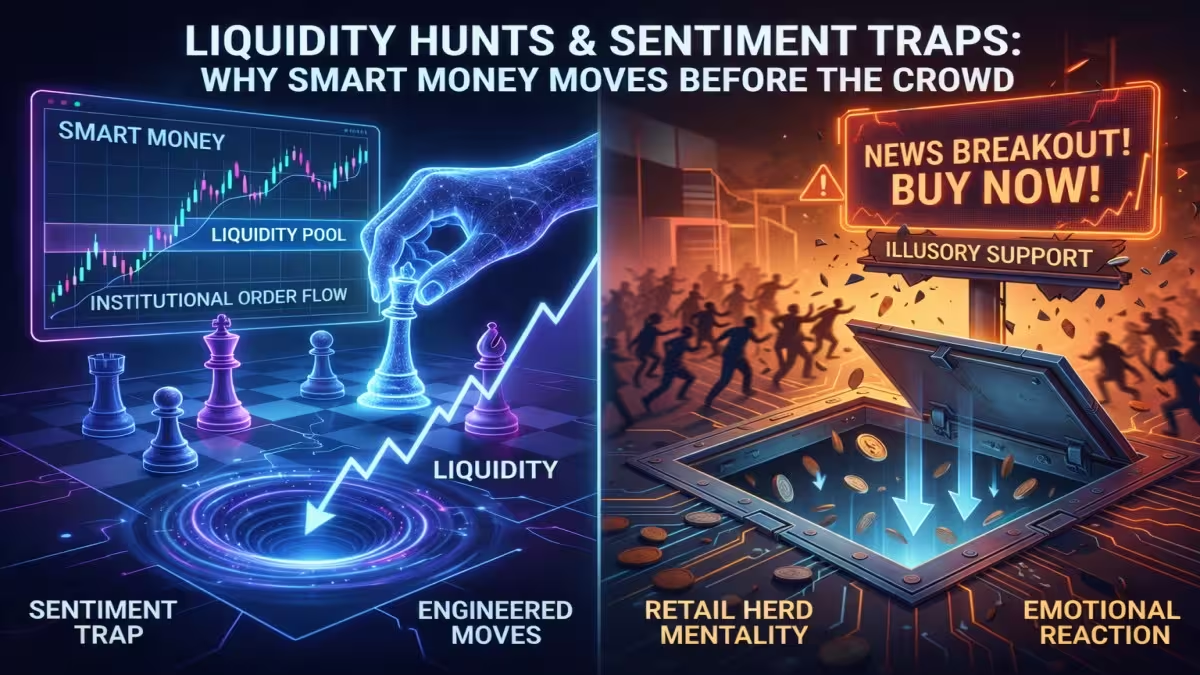
There is a psychological phenomenon specific to this period: Retail Boredom. With the stock market closed, retail traders flock to crypto. This creates a "PvP" (Player vs Player) environment where volatility is driven by emotion rather than fundamentals.
Warning: This is hunting season for MEV (Maximal Extractable Value) bots. Because liquidity is thinner, slippage is naturally higher. Sandwich bots detect these high-slippage tolerance trades set by impatient holiday traders and front-run them aggressively. If you are trading significant size, use an aggregator with MEV protection (like CowSwap or specialized RPCs).
The Sentiment Divergence
Interestingly, on-chain social metrics often flash false positives during this time. For example, Dogecoin retail sentiment might spike, not because of adoption, but because it is the only asset moving while traditional finance sleeps. Confusing "noise" for "signal" is the primary cause of holiday trading losses.
Security: Zero-Trust Architecture
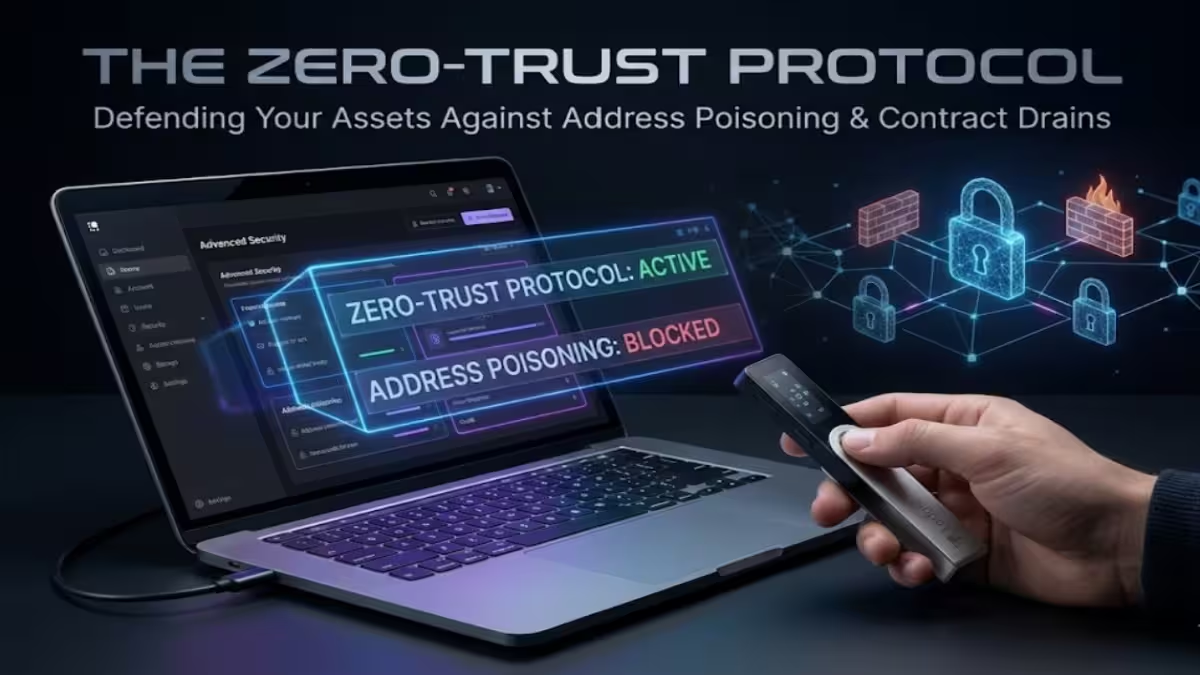
The most sophisticated phishing campaigns are time-locked for the holidays. We see a surge in "Year-End Airdrop" scams and fake "Tax Loss Harvesting Tool" approvals. The psychology is simple: urgency mixed with distraction.
As detailed in our December Crypto Threat Report, the vector has shifted from simple seed phrase theft to "Ice Phishing"—tricking users into signing a permission for a malicious contract to spend their tokens. This bypasses the need for your private key entirely.
Strategic Outlook: The January Effect
The "January Effect"—a hypothesis that assets rally in the first month of the year—has mixed results in crypto compared to stocks. However, the *setup* happens now. The rotation we see in late December often dictates the narrative for Q1.
If we see heavy accumulation in stablecoins (high dry powder) during the break, January tends to be explosive. If we see capital fleeing to fiat (net outflows), Q1 is often sluggish. Monitoring the stablecoin flows on major chains like Ethereum and Tron during this quiet week gives you the best forward-looking indicator available.
Final Word: Don't Be liquidity
The market during the holidays is a machine designed to transfer wealth from the impatient to the prepared. The lack of banking rails removes the safety net. If you must trade:
- Limit Orders Only: Never market buy in an illiquid book.
- Check Gas: Compare network fees before rotating stablecoins; 10 minutes can save you $50.
- Verify Contracts: If a token address isn't on Coingecko/CMC, it doesn't go in your wallet.
- Tax Efficiency: Calculate your net staking income before the ball drops to avoid tax bracket surprises.