USDT Networks Explained: TRC-20 vs ERC-20 & The Cost of Wrong Transfers
There is a specific kind of panic that every crypto user feels at least once. It’s that 10-minute window where you’ve hit "Send" on a large transfer, the money has left your wallet, but the receiving exchange shows zero balance. You refresh the page. Nothing. You refresh again. Still nothing.
Usually, this is just network congestion. But sometimes, it’s because you chose the wrong network rail.
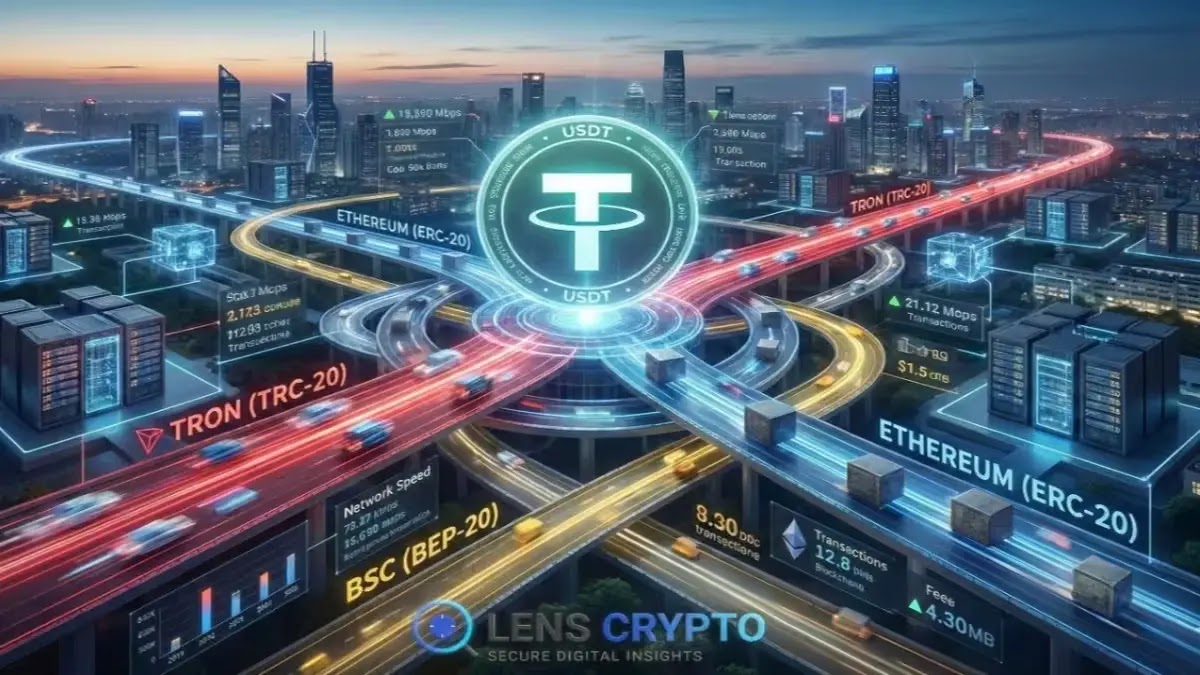
Here is the blunt truth: USDT is not a universal coin. It doesn't magically float from one wallet to another. It travels on specific highways (blockchains). If you try to drive a train (ERC-20) onto a regular asphalt road (TRC-20), you crash. And in crypto, a "crash" means your money is gone. Forever.
The Real-World Breakdown (No Tech Jargon)
Forget the whitepapers for a second. If you are moving money, you really only care about three things: "How much does it cost?", "How fast is it?", and "Will I get wrecked?".
I’ve broken down the networks below based on how traders actually use them, not how developers describe them.
| The Network | The "Street" Fee | The Vibe | Who is it for? |
|---|---|---|---|
| ERC-20 (Ethereum) | Expensive ($3 - $25) | Slow but bulletproof | Whales & Cold Storage |
| TRC-20 (TRON) | Cheap (~$1) | Fast & loose | Daily Traders |
| BEP-20 (BSC) | Dirt Cheap ($0.20) | Binance dependent | Retail Payments |
| SPL (Solana) | Free (basically) | Lightning fast | Degen trading |
1. Ethereum (ERC-20): The Armored Truck
I use ERC-20 when I'm scared. If I'm moving $50,000 to a Ledger for long-term storage, I don't care if the fee is $10. I pay it. Why? because Ethereum is the settlement layer of the internet. It doesn't go offline. It doesn't pause.
But for buying a $20 coffee? It’s useless. The gas fees will eat you alive. Also, be careful with exchanges; they love to charge a premium on ERC-20 withdrawals. Always check the withdrawal fee schedule before you click confirm.
2. TRON (TRC-20): The Motorbike Courier
TRON is how the developing world moves dollars. It’s fast, dirty, and effective. I use TRC-20 for 90% of my transfers between exchanges (like sending from Bybit to Binance). It takes 2 minutes and costs a buck.
The Catch: I don't leave money sitting on TRON forever. It’s a bit more centralized. Use it for transit, not for your retirement fund vault.
3. The "Bridge" Trap
Here is a scenario I see constantly in risk management consulting: You see a high yield on some new Layer-2 chain, so you bridge your USDT over.
Read this carefully:
When you bridge USDT, you often get a "Wrapped" token (like an I.O.U. ticket). You don't hold the actual USDT; you hold a claim check. If the bridge gets hacked—and they do get hacked—that claim check becomes worthless paper. Understand wrapped asset risks before you chase APY.
The "Void": Sending to the Wrong Address
"Can I get my money back?"
If I had a nickel for every time someone asked me this after sending ERC-20 tokens to a TRON address, I'd have more Bitcoin than Satoshi.
The short answer: Usually, no. You just made a donation to the crypto gods.
The nuanced answer:
If you sent it to a personal wallet (Self-Custody) and the mistake was between EVM chains (like sending Ethereum USDT to a BSC address), you are lucky. The private keys are the same. You just need to tweak your wallet settings. But if you sent it to an Exchange (CEX)? You are at the mercy of their customer support, and spoiler alert: they rarely help with this.
This is why understanding basic wallet architecture isn't just nerd stuff—it’s financial survival.
My Personal Rules
After years in this space, here is my checklist. Feel free to steal it:
- Rule #1: If the fee is over $5, I check if I really need to use Ethereum. Usually, TRC-20 is fine.
- Rule #2: If I'm moving more than $1,000, I send a $10 "test transaction" first. Yes, I pay double fees. I consider it insurance.
- Rule #3: I never type an address by hand. Copy-paste, then check the first 4 and last 4 characters.