The Digital Arena: Mastering the Art of Speculation
Trading is often romanticized as a quick path to a Lamborghini, fueled by viral social media clips of teenagers turning pocket change into fortunes. However, the reality of the market is far more nuanced and significantly more brutal.
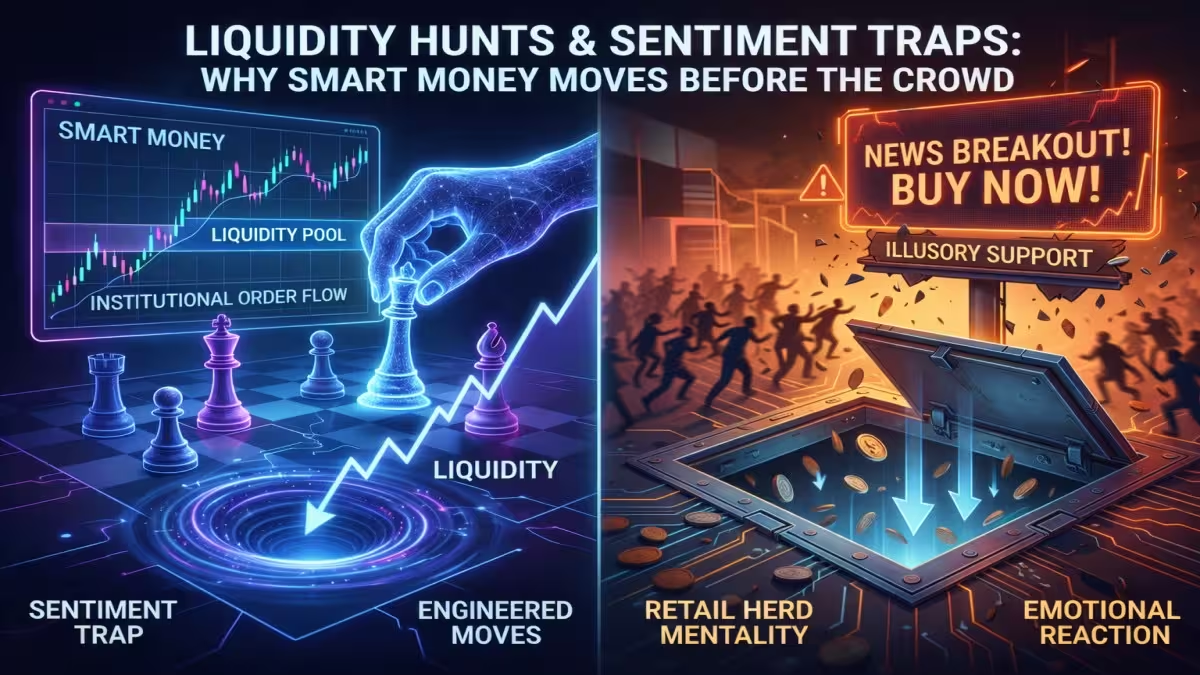
The market is not a casino where luck reigns supreme; it is a high-stakes competitive environment played against institutional algorithms and global macroeconomics. To step into this arena without a shield is to invite financial ruin. To truly understand why most traders fail, one must first grasp the deeper forces of market psychology and tokenomics that drive price action beyond simple charts.
Trading vs. Investing: Know Your Battlefield
At its core, trading is simply the act of buying and selling assets to capitalize on short-term volatility. This is distinct from investing, which relies on the long-term growth of value. You are not betting on the technology changing the world in ten years; you are analyzing human emotion, supply shocks, and liquidity flows right now.
| Feature | Trading (Speculation) | Investing (Hodling) |
|---|---|---|
| Time Horizon | Minutes to Weeks | Years |
| Primary Focus | Price Action & Volatility | Fundamentals & Adoption |
| Risk Level | High (Capital Loss Likely) | Moderate (Market Risk) |
| Required Skill | Risk Management & Psychology | Patience & Research |
The Psychological Barrier
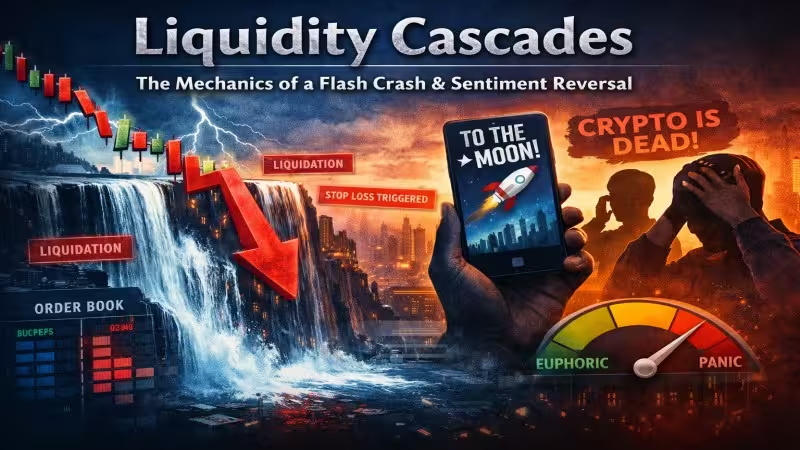
The chart you see on your screen is not just red and green candles; it is a visual representation of mass psychology. FOMO (Fear Of Missing Out) is the trader's deadliest enemy. It is that sinking feeling when you see a coin skyrocket by 300% in an hour, compelling you to buy at the absolute top.
Experienced traders understand that when the crowd is euphoric, risk is highest. This is often where understanding valuation metrics becomes critical. A low price per coin does not mean "cheap" if the supply is massive. Learning to differentiate between Market Cap vs. Fully Diluted Valuation (FDV) can save you from buying into projects that are mathematically destined to bleed value due to inflation.
- Discipline matters more than prediction accuracy.
- Patience (sitting on hands) is a valid position.
- Survival is the goal; profit is the byproduct.
Risk Management: The Art of Survival
Here is a truth rarely emphasized in "get rich quick" videos: you can lose 60% of your trades and still be profitable. How? By ensuring your winners are significantly larger than your losers. This is the essence of the Risk-to-Reward ratio.
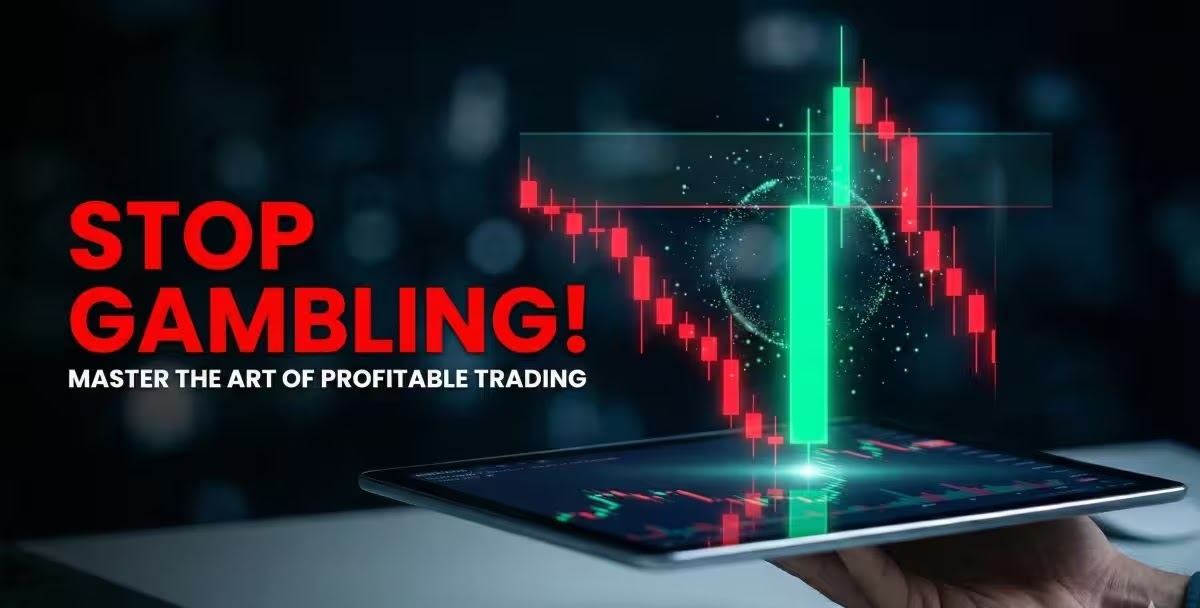
The stop loss is not optional; it is your insurance policy. Trading without one is not confidence—it is negligence.
The Infinite Learning Curve
Markets evolve. Strategies that worked in 2021 failed in 2022. The trader who survives is the one who keeps learning, journaling mistakes, and respecting risk above ego. Capital preservation must always come first.